Feeds:
Posts
Comments

On Monday, May 6 the Wilson County Beekeepers Association met at the James E. Ward Ag Center and had a big ol’ time. Jim Garrison, president of the Heartland Apicultural Society and past president of the Tennessee Beekeepers Association, joined us and spoke about nectar and pollen plants for bees. There was a packed house and we all went home with ideas about what we are going to plant for our girls this year. Herb Lester was kind enough to snap some photos and share them with us. Click the image or link below for the rest of the photos.

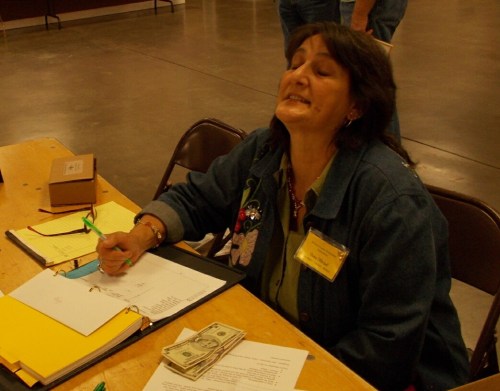
$10 is nothing to sneeze over, but she's about to.

Apparently, $10 is something to sneeze over…

https://wilsoncountybeekeepers.org/photos/wcba-meeting-6-may-2013/

.
wcba

Honey bees, which play a key role in pollinating a wide variety of food crops, are in sharp decline in the United States, due to parasites, disease and pesticides, said a federal report released on Thursday.

Download the USDA Report:  USDA_Report_Honey_Bee_Health

.
By Ian Simpson

WASHINGTON (Reuters) – Honey bees, which play a key role in pollinating a wide variety of food crops, are in sharp decline in the United States, due to parasites, disease and pesticides, said a federal report released on Thursday.

Genetics and poor nutrition are also hurting the species, which help farmers produce crops worth some $20 billion to $30 billion a year.

Honey bee colonies have been dying and the number of colonies has more than halved since 1947, said the report by the Environmental Protection Agency and the Agriculture Department.

The decline raises doubt about whether honey bees can fulfill their crucial role in pollinating crops that play a role in about one-third of all food and beverages sold in the United States, the report said.

“Overall losses continue to be high and pose a serious threat to meeting the pollination service demands for several commercial crops,” the report said.

Pollination demands have increased so much in recent years that California’s almond crop alone requires 60 percent of all managed colonies devoted to pollination — rather than honey or beeswax production.

The United States is not alone in facing this concern: The European Union moved on Monday to protect its own falling bee population by banning three of the world’s most widely used pesticides for two years.

The Varroa mite, a parasite first found in the United States in 1987, is the single biggest cause of colony loss in the United States and other countries, the report said.

Another main concern is the effect of pesticides on bee colonies. More research is needed to find out how much pesticide exposure bees get and their effects, the U.S. report said. [ … continue reading ]

Source:  http://www.scientificamerican.com/article.cfm?id=honey-bee-numbers-drop

bee_on_pollenThe Wilson County Beekeepers Association meets Monday, 6 May 2013 at 7:00 PM at the James E. Ward Agricultural Center on the Wilson County Fairgrounds in Lebanon Tennessee.
.
The program for May will be:  Nectar & Pollen Plants by Jim Garrison
.

Note: After you enter the fairgrounds through the main gate, travel east until you reach the exhibit buildings, turn left and we are in the West Building on your right. Look for all the cars.

.
wcba

WCBA Members and area beekeepers:

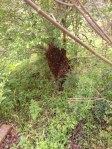
Lascassas Swarm - 15 April 2013

Lascassas Swarm – 15 April 2013

Swarm season is here.  Again, wouldn’t it be interesting and informative to know when the swarming starts, peaks, and ends here in Middle Tennessee?  This is the second year we’re doing this so with your help, we’ll have a good start on data collection. Over time this information will be used to better plan our spring increase splits.  With adequate input, this is something we can easily track throughout the year, from year to year.  And with the WCBA website ( wilsoncountybeekeepers.org ) we will have these records available year round to study every year.

Please send your swarm reports to: cedarbees@gmail.com whenever you see your colonies swarm, or when you receive a call for swarm removal.  Be sure to include the actual swarm date if observed, or approximate date if known, along with any other relevant information (time of day, weather conditions, race of bee if known, etc.).

I look forward to receiving your email, to gathering and sharing the data, and to watching the trend over time.

To see this year’s record, refer to the Swarms page un the Resources tab above, or go here:

wilsoncountybeekeepers.org/resources/swarm-reports-2013/

To see the 2012 data, go here:

wilsoncountybeekeepers.org/resources/swarm-reports-2012/

Thanks,

Greg Tomerlin
cedarbees@gmail.com

.
wcba

The Minutes for the 8 April 2013 meeting have been posted here:

You can also access the minutes from previous meetings by scrolling to the bottom of the About Us page of this web site.

.
wcba

If you missed the WCBA meeting last night, you lost! Kent Williams was our guest speaker and as usual, he entertained and educated everyone in the room. Kent is a Master Beekeeper and a masterful speaker on the subjects of bees and beekeeping. Last night’s topic was swarms and how to reduce the likelihood that a colony will swarm, but Kent also took questions from the audience on a range of beekeeping issues. The house was filled and our very own Herb Lester was wielding his camera to catch the action.  Click the link below to view photos taken at the meeting.

Kent Williams at the Wilson County Beeleepers meeting - April 2013

https://wilsoncountybeekeepers.org/photos/wcba-meeting-with-kent-williams-master-beekeeper/