Feeds:
Posts
Comments

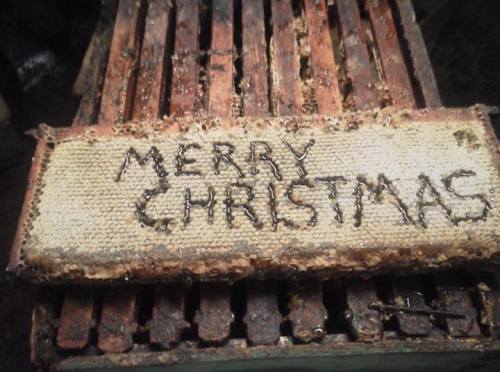
Merry Christmas

merry_christmas

.
wcba

EPA Sued Over Bees

By Julian Hattem, December 09, 2013

bees_120913thinkstock

Beekeepers are suing the Environmental Protection Agency (EPA) over its approval of a chemical they say kills honey producers.

The pesticide sulfoxaflor is “highly toxic” to bees and other insects, the groups say, and could be contributing to broader declines of bee populations around the world.

“This case is really quite simple: bees are getting wiped out, and yet the EPA rubber stamped another bee-killing pesticide,” said Earthjustice attorney Greg Loarie in a statement on Friday. “EPA failed the beekeeping industry and all of us who rely on a sustainable food supply by refusing to consider threats to pollinators from this new pesticide.”

Bees are necessary to pollinate a range of agricultural crops, and benefit as much as one-third of all food and beverages.

Since 2006, scientists have worried about a sharp decline in bee populations, known as colony collapse disorder, which some have blamed on pesticides.

The Pollinator Stewardship Council, the National Honey Bee Advisory Board, American Honey Producers Association, the American Beekeeping Federation and individual beekeepers are suing the EPA to get it to withdraw its approval of the Dow Chemical pesticide. The groups are being represented by EarthJustice.

They say that the agency ignored concerns about Dow’s field tests and needs to issue stronger labeling requirements to limit the hazard the substance poses to bees.

Sulfoxaflor is in a class of pesticides known as neonicotinoid. This month, a European Union ban of three different neonicotinoids went into effect, which policy makers there said was necessary to protect bees. The suspension will last for two years.

The EPA has declined to take similar steps to restrict the sales of the pesticides.

In August, however, the agency released new labels for pesticides containing neonicotinoids warning that they can “kill bees and other insect pollinators.”

Source: http://thehill.com/blogs/regwatch/court-battles/192523-epa-sued-over-bees

.
wcba

December 6, 2013 | by Lisa Winter

Honey bee 01_thumb[6]Remember that bee you swatted at and tried to kill, but it ended up getting away? Watch your back, because it knows what you look like. New research reveals that certain paper wasps and honeybees can remember distinct characteristics of individual faces. This came as a surprise to researchers who did not expect to see such advanced social abilities in creatures with such tiny brains.

Humans are excellent at identifying people based on looks. Other animals, like crows, have been documented as being able to identify individuals too, though their brains are much bigger and they are generally regarded as much more intelligent than these paper wasps. Honeybees were also shown to be able to recognize different faces, including those belonging to humans.

When these insects view an individual (be it another insect or the person who just pissed them off by swinging a newspaper at them), their field of vision is broken up into hexagons from the thousands of ommatidia that make up the compound eye. Essentially, they process information based on these chunks from the structures in the eye that act as individual units and put the entire picture together. It might not be very clear compared to what we are used to since they don’t have a pupil to regulate the amount of light coming in onto the retina, but it is good enough to allow wasps and bees to discern prominent facial features that can be used for identification.

Understanding how these insects are able to achieve this high level of individual detection with such a relatively simple brain might be able to inspire new facial recognition programs. This research was announced by Elizabeth Tibbetts from the University of Michigan published a paper on these results in the journal Ethology. Her colleague Adrian Dyer from RMIT University has published five papers this year regarding Hymenoptera vision.

Source:  http://www.iflscience.com/plants-and-animals/wasps-can-remember-individual-faces

.
wcba

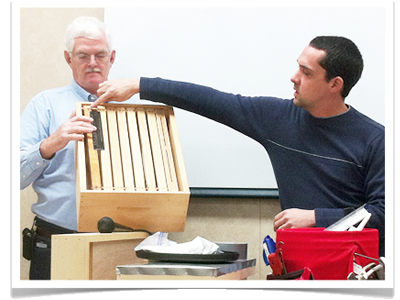
trevor_and_johnThe Wilson County Beekeepers Association will meet on Monday, 6 January 2014 at 7:00 PM in the West Building at the James E. Ward Agricultural Center in Lebanon, Tennessee.

The program will be: Natural Beekeeping w/ Trevor Qualls from Bon Aqua Springs Apiaries

Trevor makes and sells wooden ware for beekeeping, along with some other beekeeping supplies, right here in Middle Tennessee. If you need something and want to save some money on shipping, visit www.basprings.com and place your order in time for Trevor to bring it to the meeting.

Note: After you enter the fairgrounds through the main gate, we are in the West Building (2nd building on your left). Look for all the cars.

.

wcba

ADVANCED BEEKEEPING WINTER WORKSHOP

 Ellington Agriculture Center, Jones Auditorium, Nashville, Tennessee

Sponsored by Nashville Area Beekeeper’s Association

JANUARY 18, 2014


The NASHVILLE AREA BEEKEEPERS ASSOCIATION (“NABA”) is sponsoring a workshop presented by PHIL CRAFT, CLARENCE COLLISON, AND KENT WILLIAMS This workshop is designed for those that want increase their knowledge of raising honey bees..  The course is open to everyone with an interest.  It will begin on Saturday, January 18, 2014, at 8:30 am and conclude at 3:00 pm.  The subject matter will include, but not be limited to, the following:

Class #1-RAISING QUEENS FOR THE HOBBYIST
Class #2-VARROA MITE BIOLOGY & CONTROL
Class #3-HOW TO IDENTIFY COMMON QUEEN PROBLEMS
Class #4-REDUCING COLONY LOSS
Class #5-COLONY MANAGEMENT FOR MAXIMUM HONEY PRODUCTION
Class #6 HONEY BEE NUTRITION
Class #7 APPLYING THE BASICS OF HONEY BEE BIOLOGY
Class #8 INCREASING COLONIES
Class #9 SWARM PREVENTION

Kent Williams is President of the Lake Barkley Beekeepers in Wingo, Ky., past president  of the Eastern Apiculture Society (EAS), a EAS master beekeeper and a frequent speaker at EAS, Heartland Beekeepers Society (HAS) and many other regional and state conferences. Kent maintains around 400 colonies in Kentucky and Mississippi. He has for several years raised his own queens from survivor hives which he uses to make nucs and requeen established colonies.

Phil Craft, retired Kentucky state Apiarist who served from1999 to 2011 and has been keeping bees much of his life. Phil has a website devoted to the art and science of beekeeping.(http://philcrafthivecraft.com). Phil is featured monthly in BEE CULTURE MAGAZINE.

Clarence Collison is an Emeritus Professor of Entomology and Department Head Emeritus of Entomology and Plant Pathology at Mississippi State University, Mississippi State, MS. Clarence is featured monthly in BEE CULTURE MAGAZINE.

The presenting individuals have decades of experience and would like to share their knowledge with those who are interested in advancing their beekeeping skills. The workshop will be limited to the first 100 registered participants.

The fee to attend all sessions is Twenty Five Dollars ($25) and is payable to the NABA. LUNCH WILL BE PROVIDED BY NABA.(Corky’s) The Application Form is located on the website which is www.nashbee.org.  Please join us on this day! Lot’s of fun and fellowship. Numerous door prizes. Vendors(Ed Johnson Bees, Wolf Creek Bees, Bon Aqua Springs Woodenware, and Kelley’s). For additional information, please contact Joel White (615) 308-3776.

.
wcba

The Minutes for the 2 December 2013 Christmas Dinner have been posted here:

https://wilsoncountybeekeepers.org/about/minutes-201312/

You can access the minutes from this and previous meetings by scrolling to the bottom of the About Us page of this web site.

.
wcba