We have a few photos from the workshop this weekend, thanks to Ian McNabb. It’s almost time to fire up those smokers and get in amongst ’em.

Workshops – 2014 WCBA Beginner Winter Refresher – 8 February
.
wcba
We have a few photos from the workshop this weekend, thanks to Ian McNabb. It’s almost time to fire up those smokers and get in amongst ’em.
Workshops – 2014 WCBA Beginner Winter Refresher – 8 February
.
wcba
Posted in Photos | Leave a Comment »
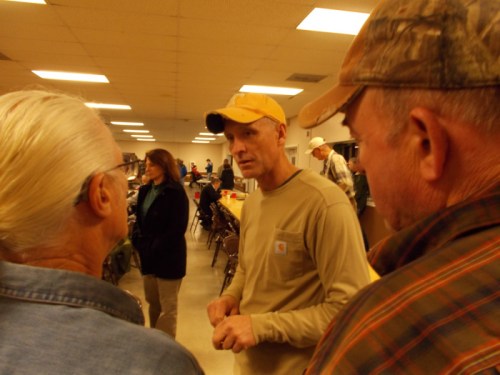
Photos of the meeting with queen breeder Mike Haney of Ridgetop Apiaries in Baxter, TN are now online. Thank you Herb Lester for sharing your photos.
.
wcba
Posted in Photos | Leave a Comment »
The Minutes for the 03 February 2014 meeting have been posted here:
You can access the minutes from this and previous meetings by scrolling to the bottom of the About Us page of this web site.
.
wcba
Posted in Announcements, Meeting Minutes | Leave a Comment »
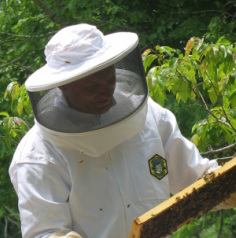 The Wilson County Beekeepers Association will meet on Monday, 3 February 2014 at 7:00 PM in the West Building at the James E. Ward Agricultural Center in Lebanon, Tennessee.
The program will be:
Raising Queens w/ Mike Haney of Ridgetop Apiaries
.
From the Ridgetop Apiaries website ( ridgetopapiaries.com ):
“RidgeTop Apiaries is located in middle Tennessee in the hills of the Cumberland Plateau. We are a small family run business that takes pride in quality. I had been raising queens for my own use, but before I began to offer queens for sale, I felt that I needed to be certain of offering a high quality queen. My desire to do this lead me to travel to Michigan, where I was taught the art of queen rearing by Dr. Lawrence (Larry) Conner. While there, we discussed the importance of combining varroa resistant genetics with genes from locally adapted populations of bees in order to introduce the resistant genetic trait and still maintain productivity in any given region. After returning from the school in Michigan I began to implement this type of breeding program which has produced excellent queens. Also, because of our location in the mountains, we are away from large row crops and our bees are as pesticide free as possible. All of our queens are allowed to lay for four weeks in order that only those with the best qualities are offered to our customers.”
Note: After you enter the fairgrounds through the main gate, we are in the West Building (2nd building on your left). Look for all the cars.
.
wcba
Posted in Announcements | Leave a Comment »
 Four pesticides commonly used on crops to kill insects and fungi also kill honeybee larvae within their hives, according to new research. Scientists also found that N-methyl-2-pyrrolidone — an inert, or inactive, chemical commonly used as a pesticide additive — is highly toxic to honeybee larvae.
“We found that four of the pesticides most commonly found in beehives kill bee larvae,” said Jim Frazier, professor of entomology, Penn State. “We also found that the negative effects of these pesticides are sometimes greater when the pesticides occur in combinations within the hive. Since pesticide safety is judged almost entirely on adult honeybee sensitivity to individual pesticides and also does not consider mixtures of pesticides, the risk assessment process that the Environmental Protection Agency uses should be changed.”
According to Frazier, the team’s previous research demonstrated that forager bees bring back to the hive an average of six different pesticides on the pollen they collect. Nurse bees use this pollen to make beebread, which they then feed to honeybee larvae.
To examine the effects of four common pesticides — fluvalinate, coumaphos, chlorothalonil and chlorpyrifos — on bee larvae, the researchers reared honeybee larvae in their laboratory. They then applied the pesticides alone and in all combinations to the beebread to determine whether these insecticides and fungicides act alone or in concert to create a toxic environment for honeybee growth and development. [ … continue reading ]
Source: http://www.sciencedaily.com/releases/2014/01/140127122825.htm
.
wcba
Posted in Announcements, In the News, Science | Leave a Comment »
Jan. 18, 2014 — Gender differences in nature are common, including in humans. A research team from Bern, Switzerland has found that male European honey bees, or drones, are much more susceptible than female European honey bees, known as workers, to a fungal intestinal parasite called Nosema ceranae. Originally from Asia, Nosema ceranae has rapidly spread throughout the world in recent years, and may contribute to the high number of colony deaths now observed in many regions of the northern hemisphere. These findings demonstrate the delicate nature of male honey bees, which are important to honey bee colony reproduction, to a well-distributed parasite. [ … continue reading ]
Source: http://www.sciencedaily.com/releases/2014/01/140118122503.htm
.
wcba
Posted in In the News, Science | Leave a Comment »

WCBA Membership
WCBA Membership Application
.
WCBA Meeting Minutes
Meeting Minutes Archive


